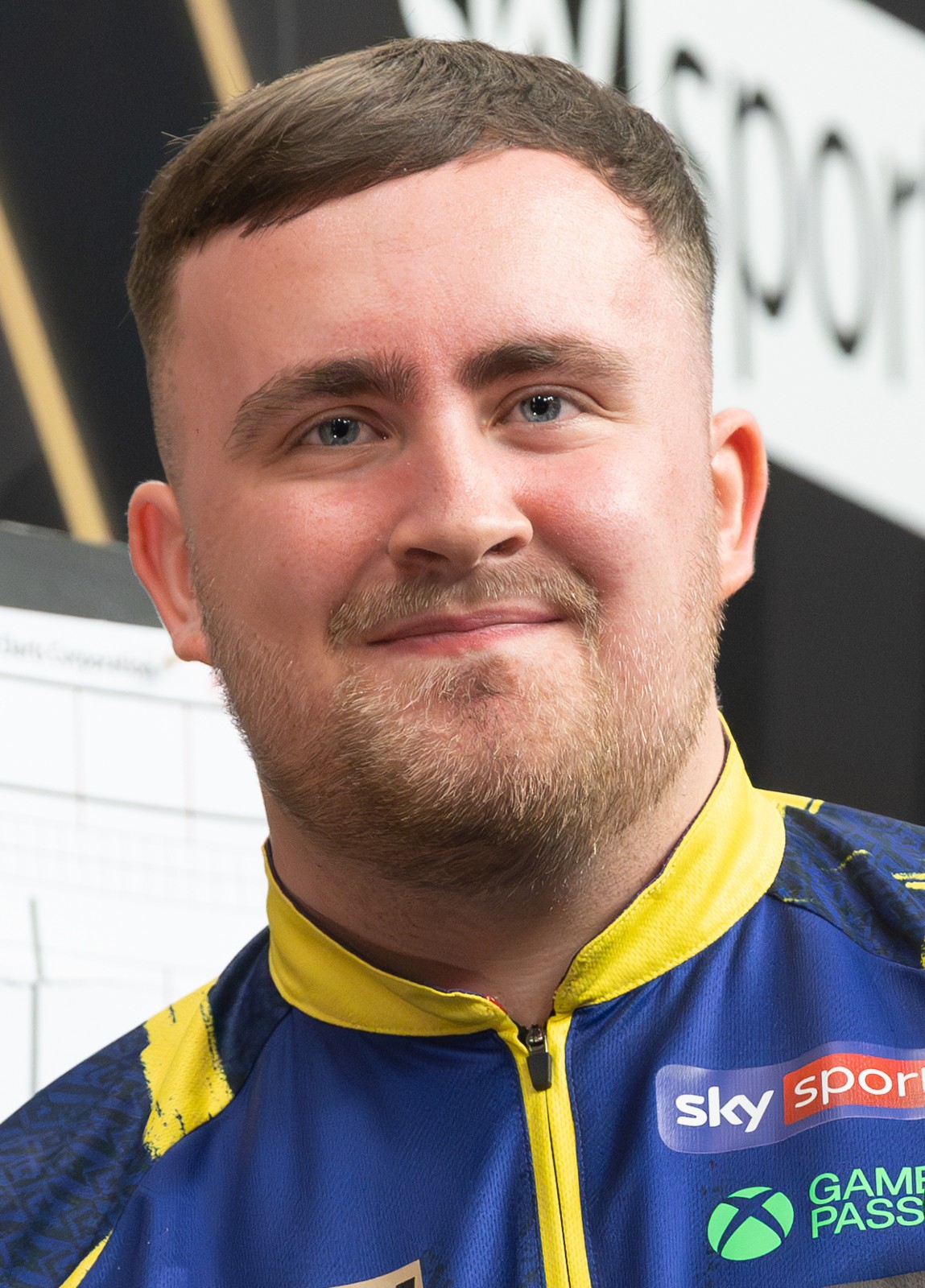
Berry van Peer has opened up about the darkest period of his career, revealing he considered walking away from darts entirely as he battled dartitis. In a candid feature on Tungsten Talk by the MODUS Super Series, the Dutchman recalled how the condition first crept into his game and nearly derailed a promising career.
The issue became visible to a wider audience at the Grand Slam of Darts in 2017, but Van Peer had been dealing with it for months by then. The first signs appeared at a smaller tournament. "It was actually, I think it was maybe like at least half a year before that. Kind of started like a smaller tournament. But I thought it was just a reflex of things going on," he said. "And the rest of that weekend, nothing really happened. But then I went on to another tournament. And it happened again."
A key turning point followed at a European Tour qualifier. Van Peer played excellently and won his opener with an average around a ton. He eventually reached the final against Vincent van der Voort. "I was playing really well that tournament. I won my first round with around 100 average. So I was like feeling good," he recalled. "And then at some point I was in the final against Vincent van der Voort. And I was leading. And then I was on a double or something. And things happened around me, like a lot of sounds. And I was so very, how do you say, like over-alert on it. So I was noting everything around me. And then my body just wanted to throw something. And something happened. And I just completely stopped."
At first, Van Peer tried not to read too much into it. But the problem didn't go away. "I missed doubles. And Vincent was like, I'm not sure what just happened. But I think it's the worst possible thing," he said. "And I actually went on to just throw my darts away. Like, just let him win, like, I don't know, 6-3, 6-4. I don't even remember. And he was after a game like, I'm so sorry, man. I was like, no problem. Like, maybe it just happened."
From that moment it kept getting worse. At the same time, Van Peer knew he had qualified for the Grand Slam of Darts. What should have been a highlight in his young career turned into a huge mental ordeal. "You're telling yourself to be calm. You're just trying to imagine people are not there. The worst part was actually that in the practice room, I had it a little bit." In the practice room it initially seemed manageable. "I was actually playing okay. Sometimes it took a little bit of time before I would throw. But no one really noticed I had it. And then once I got on there, my first nine practice darts were okay. So I was like, okay, it's going to be decent maybe. But then the match started and I just completely blocked. I felt more bad for my opponent than for myself. And that's just something I couldn't handle more, I think."
Remarkably, Van Peer wasn't only worried about himself. He mainly felt guilty towards his opponents. Against Simon Whitlock, Van Peer even managed to win despite his problems. The Australian didn't understand at first what was going on. "Yeah, he was the first one I got. So yeah, that was really tough. I won it and I didn't even know what to say. And he was angry about it. Because he thought I was actually trying to put him off. But I was actually trying to get as fast as possible to let him get in his rhythm."
The crowd reaction didn't make it easier either. During his match against Gary Anderson, many spectators initially didn't understand why Van Peer needed so long to release his darts. "Yeah, so I was trying to get people into their rhythms. Because I wanted them to not feel anything like I was taking them off their game or anything. So I was trying my best for them, not even for myself. And I think because of that, I put so much pressure on trying to release it. That, yeah, it just got too much at some point. And especially against Gary. He was a great sportsman, 100%."
For a long time, Van Peer didn't even want to hear the word dartitis. "People treat it like as a huge curse word. But then in the dart world, of course. Yeah, it was pretty much that for sure. It didn't really help me a lot when people actually mentioned it. I didn't want to hear the word at some point. But it's because you're kind of like denying yourself to hear these words because they will maybe affect your game even more. So I avoided them a lot. But at some point I was like, I don't care anymore. Just say what you got and go on with it. And yeah." In 2017, despite battling dartitis, Van Peer still made it through the Grand Slam of Darts group stage.
Van Peer knew the stories of players who had suffered from dartitis before. Eric Bristow is the most famous example. Still, the Dutchman never expected it to happen to him. The problem also came at a particularly unfortunate time. Van Peer was young, regarded as a big talent, and held a Tour Card. Suddenly his entire career was on shaky ground. "Do I just go do something else? But I was like, I know I can reach top 64 of the world, but maybe even top 40, if I do actually reach my level most of the time. And I was still young, so I was trying to get to that level mostly. And then I just collapsed. So you have to find some more motivation to keep going. Yeah, luckily I did."
In the end, he never gave up. His inner circle played a crucial role in that. Above all, his brother helped Van Peer through the toughest spell. "Well, there is an endless amount of gratitude I have for my brother, of course. So much respect for even that period alone was crazy because he would just have to wait like maybe one minute, two minutes per throw. And he would still just throw a good level because he got used to it. So he definitely helped me. We did some certain games to try and get me going more instead of just 15 minutes, for example. And then my whole family supported me, friends, everything like that. It was really good. A really good environment to be supported in. Yeah. Like I said, I can't thank my brother enough to even go through with all those things because I think honestly, if he didn't want to be bothered by it or like practise less with me or something, I might have just said at some point, like, yeah, it's not working. I'm just going to give up more and more, get more lazy into the practise. So I would definitely clap my hands for that."
Van Peer also changed several aspects of his game. He adjusted his stance at the oche and tweaked his throw. He saw a physiotherapist and tried dry needling. But perhaps more important was the shift in his mindset. "I was usually a person who would hit like an 85 and be like, come on, should it be more? But now I was like, even if it's 26, I'm like, you threw your three darts pretty nicely. They're nice in the board." His expectations had to come down drastically. Instead of thinking like a professional darter who must post high averages, Van Peer essentially started again from the very bottom. "So I had to actually start from Pro Tour thoughts, like that level, to as bottom as I could. And I just had small steps. I used to practise a lot with my brother. But he also accepted the fact that if he wanted to practise for like an hour or two and if after 15 minutes or 20 minutes, I would just give up. If it didn't feel like it was my day, I would just quit because I just knew it wasn't going to work out and it wasn't going to be positive. So I just took those small steps every time."
Van Peer now views his career very differently. After strong performances on the Challenge Tour he returned to the Pro Tour and is currently trying to climb again. Dartitis no longer rules his daily life, although he is still asked about it regularly because of his past. "Constantly aware of, no. Obviously, I still get a lot of questions about it. So if some people are struggling, they usually text me or they call me or see them at tournaments. They're like, hey, do you have any tips? I'll gladly help them. I actually also give clinics at a darts shop as well. Not all the time, of course, because I don't want to maybe do it all the time because then I might actually start thinking about it a lot as well. So overall, I'm not thinking too much about it. Darts is actually going pretty well."
His ambition is clear: return to the PDC Tour. He has support from the likes of Danny Noppert. "I'm motivated to get better and better again. Of course, I also got my best buddies on the dart tour missing me a little bit, like Danny for example. So he's motivating me as well to get back." Van Peer also represents the Dutch national team and is looking forward to the European Cup. He says he has already won the World Cup with the Netherlands. There are targets there too, but his bigger mission remains the same: to prove again what he can do as a darter.
For young players going through the same thing now, Van Peer has one main message. For a good darter, it can be especially hard to suddenly accept a level far below your own standard, Van Peer says. Yet that was ultimately the key for him. "Well, first of all, obviously don't give up because you're still young. You have so many years ahead of you. You should try to enjoy the game, even though it's probably the worst thing you can experience. Just try to think easy, like don't put so much pressure on yourself. Every throw you do, don't expect you're going to hit a 180 or 100 every throw. You're just going to go with the lowest and build up from there. Even if you're a good player, the toughest thing to do is telling yourself, oh, you can accept that you're throwing a pretty bad average for your feeling, but you're actually making big steps. So I think that's definitely for the mentality for sure. It's a thing that you should just not be expecting too much of yourself."